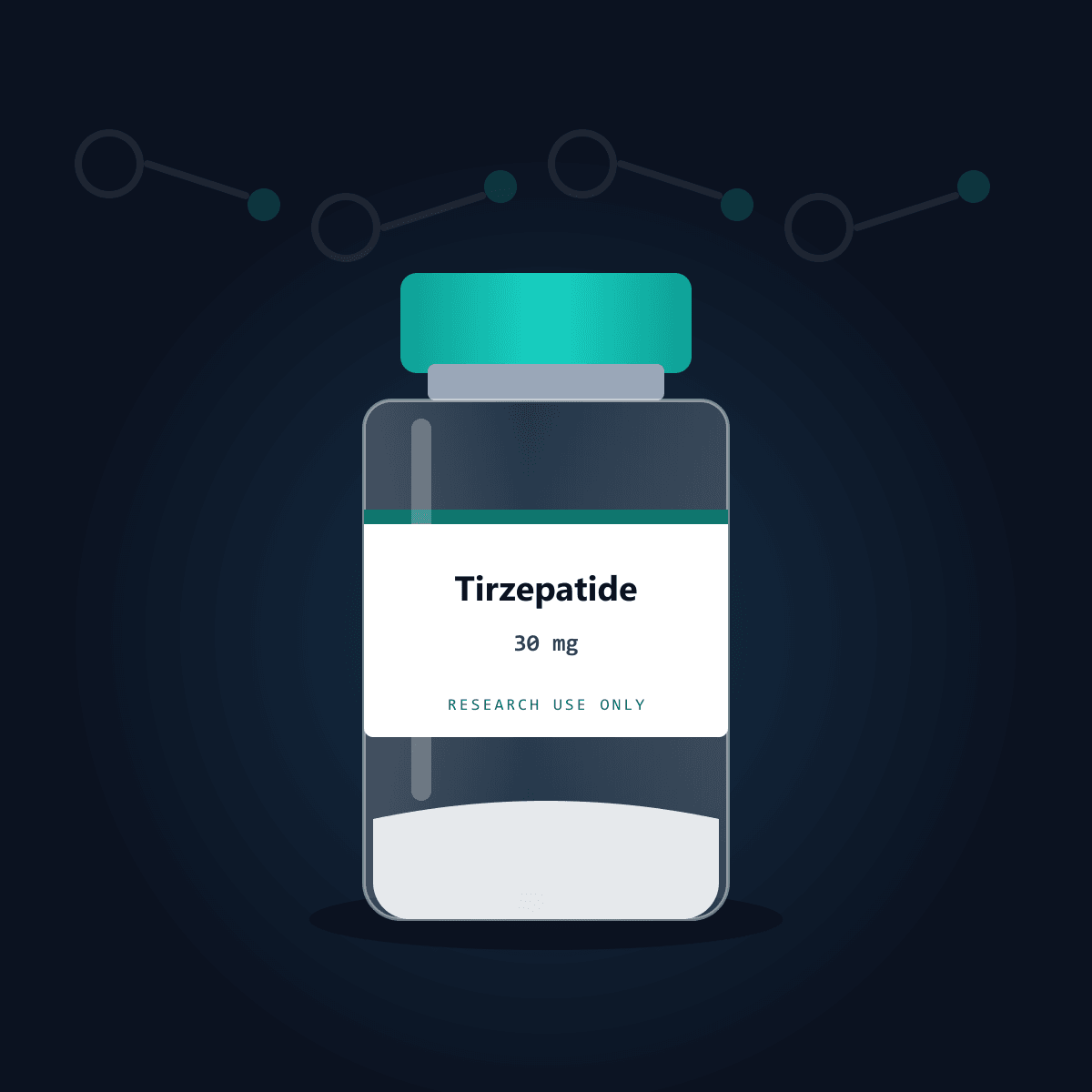
CAS 2023788-19-2
In stockTirzepatide
Dual GIP/GLP-1 receptor agonist peptide studied in metabolic research, supplied as a 30 mg lyophilized vial for in-vitro and analytical work.
- Purity
- Per batch COA
- Vial
- 30 mg
TT$2,000.00indicative
2 research peptides
CAS 2023788-19-2
In stockDual GIP/GLP-1 receptor agonist peptide studied in metabolic research, supplied as a 30 mg lyophilized vial for in-vitro and analytical work.
TT$2,000.00indicative
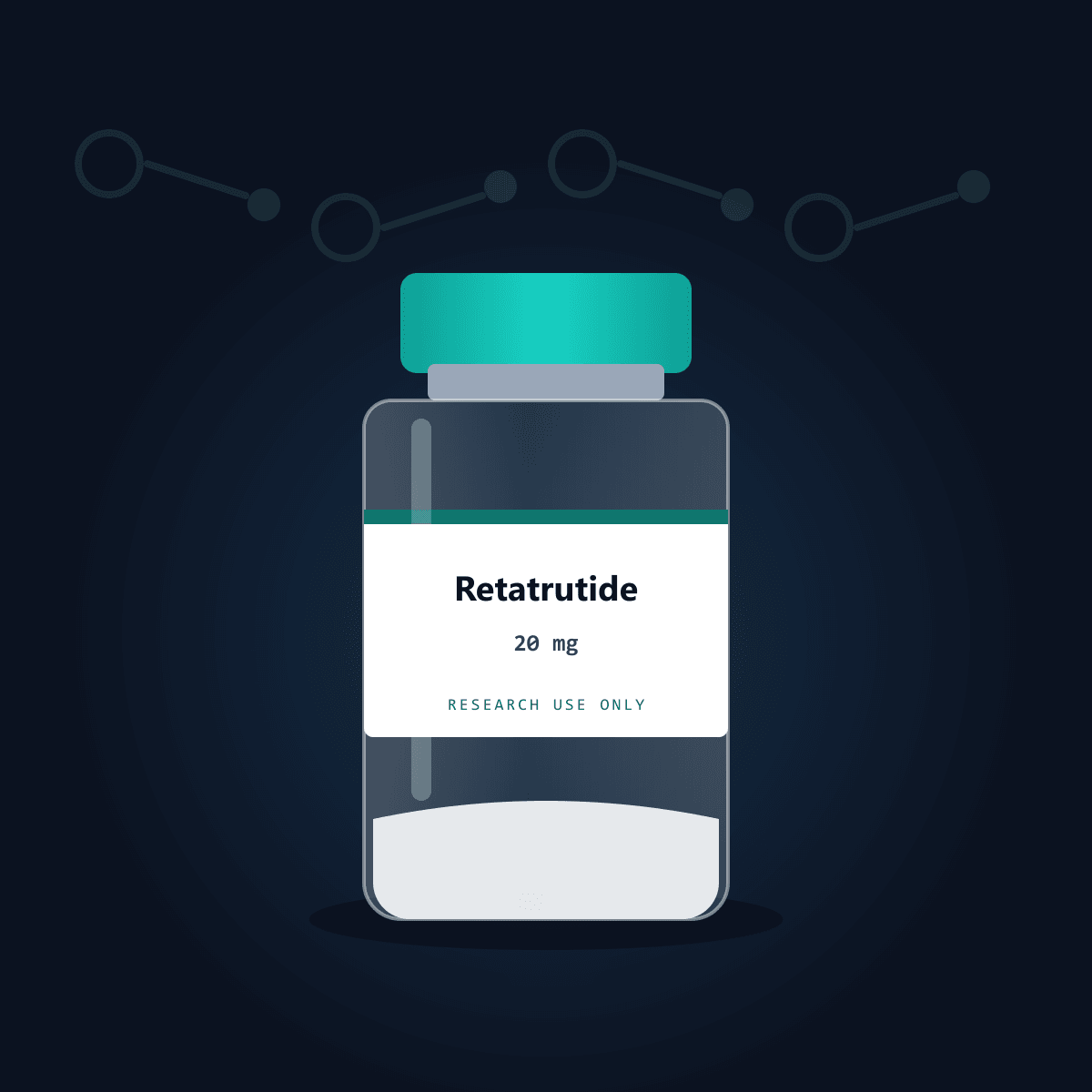
CAS 2381089-83-2
In stockInvestigational GIP, GLP-1 and glucagon triple receptor agonist peptide, supplied as a 20 mg lyophilized vial for in-vitro metabolic research.
TT$2,200.00indicative
Prices in TT$. Final quote confirmed after enquiry review.
About this category
Metabolic research peptides are synthetic sequences designed to act at the receptors of the incretin and glucagon family, a group of class B G protein-coupled receptors that has become one of the most active areas of peptide pharmacology. This category brings together tirzepatide, a dual agonist at the GIP and GLP-1 receptors, and retatrutide, an investigational triple agonist that also engages the glucagon receptor.
Both compounds are 39-residue peptides that differ from native sequences in deliberate ways. Each contains α-aminoisobutyric acid, a non-proteinogenic residue, at selected positions, ends in a C-terminal amide, and carries a lysine side chain acylated with a long-chain fatty diacid through short hydrophilic linkers. These modifications take the molecular weight above 4.7 kDa and make the molecules markedly more hydrophobic than unmodified peptides of a similar length.
In the laboratory, these peptides are used as reference agonists in receptor binding and cAMP signalling assays, in selectivity studies that compare single, dual and triple receptor activity, and as analytical standards when developing LC-MS methods for lipidated peptides. Their size means electrospray spectra show several charge states, so identity is best confirmed against the theoretical deconvoluted mass.
Each product page lists the CAS number, molecular formula and molecular weight from public chemical databases, and purity is reported per batch on the certificate of analysis. All items are held in Trinidad and Tobago and sold strictly for laboratory research use.